Sabtu, 31 Agustus 2013

[R307.Ebook] Ebook Download Silent Hill: The Terror Engine (Landmark Video Games), by Bernard Perron

Ebook Download Silent Hill: The Terror Engine (Landmark Video Games), by Bernard Perron

Do you recognize why you should review this website and also just what the relation to reviewing publication Silent Hill: The Terror Engine (Landmark Video Games), By Bernard Perron In this contemporary age, there are lots of means to obtain the book and also they will certainly be much simpler to do. One of them is by obtaining the publication Silent Hill: The Terror Engine (Landmark Video Games), By Bernard Perron by online as exactly what we tell in the web link download. The book Silent Hill: The Terror Engine (Landmark Video Games), By Bernard Perron could be an option since it is so appropriate to your requirement now. To obtain the publication on-line is very simple by simply downloading them. With this possibility, you can read guide anywhere and whenever you are. When taking a train, awaiting list, and also hesitating for an individual or various other, you could read this online e-book Silent Hill: The Terror Engine (Landmark Video Games), By Bernard Perron as a great pal once more.

Silent Hill: The Terror Engine (Landmark Video Games), by Bernard Perron

Silent Hill: The Terror Engine (Landmark Video Games), by Bernard Perron


Silent Hill: The Terror Engine (Landmark Video Games), by Bernard Perron

Ebook Download Silent Hill: The Terror Engine (Landmark Video Games), by Bernard Perron

Silent Hill: The Terror Engine (Landmark Video Games), By Bernard Perron. It is the moment to improve and freshen your ability, expertise and encounter included some home entertainment for you after long period of time with monotone things. Working in the workplace, visiting research, learning from test and also more tasks might be finished and also you have to start brand-new things. If you really feel so worn down, why do not you try brand-new thing? A very easy point? Reading Silent Hill: The Terror Engine (Landmark Video Games), By Bernard Perron is exactly what our company offer to you will certainly know. And guide with the title Silent Hill: The Terror Engine (Landmark Video Games), By Bernard Perron is the reference now.

As we stated previously, the innovation assists us to always identify that life will certainly be consistently easier. Reading book Silent Hill: The Terror Engine (Landmark Video Games), By Bernard Perron habit is likewise among the benefits to obtain today. Why? Modern technology could be used to supply guide Silent Hill: The Terror Engine (Landmark Video Games), By Bernard Perron in only soft documents system that can be opened up every time you really want and also almost everywhere you require without bringing this Silent Hill: The Terror Engine (Landmark Video Games), By Bernard Perron prints in your hand.

Those are some of the perks to take when obtaining this Silent Hill: The Terror Engine (Landmark Video Games), By Bernard Perron by on the internet. But, how is the means to get the soft data? It's really appropriate for you to visit this page due to the fact that you could obtain the link page to download guide Silent Hill: The Terror Engine (Landmark Video Games), By Bernard Perron Simply click the web link offered in this post and goes downloading. It will not take significantly time to obtain this e-book Silent Hill: The Terror Engine (Landmark Video Games), By Bernard Perron, like when you have to choose e-book store.

This is additionally among the factors by obtaining the soft data of this Silent Hill: The Terror Engine (Landmark Video Games), By Bernard Perron by online. You may not require even more times to invest to visit the publication establishment and search for them. Often, you likewise don't locate the publication Silent Hill: The Terror Engine (Landmark Video Games), By Bernard Perron that you are hunting for. It will lose the time. Yet right here, when you see this web page, it will certainly be so easy to obtain and also download the e-book Silent Hill: The Terror Engine (Landmark Video Games), By Bernard Perron It will not take sometimes as we specify in the past. You can do it while doing something else at residence and even in your office. So simple! So, are you question? Merely exercise what we provide below as well as check out Silent Hill: The Terror Engine (Landmark Video Games), By Bernard Perron just what you like to check out!

Silent Hill: The Terror Engine (Landmark Video Games), by Bernard Perron

Silent Hill: The Terror Engine, the second of the two inaugural studies in the Landmark Video Games series from series editors Mark J. P. Wolf and Bernard Perron, is�both a�close analysis of the first three Silent Hill games and a general look at the whole series. Silent Hill, with its first title released in 1999, is one of the most influential of the horror video game series. Perron situates the games within the survival horror genre, both by looking at the history of the genre and by comparing Silent Hill with such important forerunners as Alone in the Dark and Resident Evil. Taking a transmedia approach and underlining the designer's cinematic and literary influences, he uses the narrative structure; the techniques of imagery, sound, and music employed; the game mechanics; and the fiction, artifact, and gameplay emotions elicited by the games to explore the specific fears survival horror games are designed to provoke and how the experience as a whole has made the Silent Hill series one of the major landmarks of video game history.

  • Sales Rank: #568106 in Books
  • Published on: 2012-01-03
  • Original language: English
  • Number of items: 1
  • Dimensions: 9.00" h x .60" w x 6.00" l, .60 pounds
  • Binding: Paperback
  • 172 pages

About the Author

Bernard Perron is Professor of Cinema at the Universit� de Montr�al and coeditor, with Mark J. P. Wolf, of the Landmark Video Games series.

Most helpful customer reviews

12 of 12 people found the following review helpful.
A must-read for any Silent Hill fan.
By Robert D.
Really good read for a Silent Hill fan, although it would appeal most to someone obsessed with the series. I like how this book covers how the series relates to so many different contributions to the genre, not just Session 9 and Jacob's Ladder. It offers something different, which is important because all of the typical talking points for SH have been exhausted over the years since the series abandoned subtle references after SH4. The only flaw is the somewhat grainy picture quality.

10 of 10 people found the following review helpful.
Finally A Philosophical Visit To Silent Hill
By Drew Dahmer
This is truly a great read for longtime fans of the Silent Hill franchise. In addition to being a pleasant walk down a truly nightmarish memory lane for former visitors to that "special place", it takes a fresh new approach to the philosophical aspect of the series. I would say that as the reviewer before me pointed out, hardcore fans will be much more fond of this book than newcomers or fans only of the film, but either way it's an intelligent look at the survival horror genre in general, and Silent Hill in particular. Welcome Back to the spookiest little town ever to grace a video game!

2 of 2 people found the following review helpful.
Delivers exactly what is promised
By Jonathan
The Silent Hill is one of the series that gets interesting with deeper study. What Perron has done with this book is show a method for close reading games like that of the Silent Hill series. The book would be a good purchase for scholars and Silent Hill fans alike.

See all 4 customer reviews...

Silent Hill: The Terror Engine (Landmark Video Games), by Bernard Perron PDF
Silent Hill: The Terror Engine (Landmark Video Games), by Bernard Perron EPub
Silent Hill: The Terror Engine (Landmark Video Games), by Bernard Perron Doc
Silent Hill: The Terror Engine (Landmark Video Games), by Bernard Perron iBooks
Silent Hill: The Terror Engine (Landmark Video Games), by Bernard Perron rtf
Silent Hill: The Terror Engine (Landmark Video Games), by Bernard Perron Mobipocket
Silent Hill: The Terror Engine (Landmark Video Games), by Bernard Perron Kindle

Silent Hill: The Terror Engine (Landmark Video Games), by Bernard Perron PDF

Silent Hill: The Terror Engine (Landmark Video Games), by Bernard Perron PDF

Silent Hill: The Terror Engine (Landmark Video Games), by Bernard Perron PDF

Kamis, 29 Agustus 2013

[F784.Ebook] PDF Ebook The Billionaire's Indulgence 2, by Ellen Waite

PDF Ebook The Billionaire's Indulgence 2, by Ellen Waite

What kind of book The Billionaire's Indulgence 2, By Ellen Waite you will favor to? Currently, you will certainly not take the printed publication. It is your time to obtain soft data publication The Billionaire's Indulgence 2, By Ellen Waite rather the printed papers. You can enjoy this soft data The Billionaire's Indulgence 2, By Ellen Waite in at any time you anticipate. Also it is in anticipated place as the various other do, you can review the book The Billionaire's Indulgence 2, By Ellen Waite in your gadget. Or if you desire much more, you could read on your computer system or laptop to obtain complete display leading. Juts locate it here by downloading the soft data The Billionaire's Indulgence 2, By Ellen Waite in web link page.

The Billionaire's Indulgence 2, by Ellen Waite

The Billionaire's Indulgence 2, by Ellen Waite


The Billionaire's Indulgence 2, by Ellen Waite

PDF Ebook The Billionaire's Indulgence 2, by Ellen Waite

The Billionaire's Indulgence 2, By Ellen Waite As a matter of fact, book is truly a home window to the globe. Also many people may not such as checking out books; guides will still provide the specific info regarding truth, fiction, encounter, experience, politic, religious beliefs, and more. We are below an internet site that gives collections of books greater than the book store. Why? We offer you bunches of varieties of link to get the book The Billionaire's Indulgence 2, By Ellen Waite On is as you need this The Billionaire's Indulgence 2, By Ellen Waite You could locate this publication easily right here.

Why must be The Billionaire's Indulgence 2, By Ellen Waite in this website? Obtain a lot more profits as exactly what we have actually informed you. You could locate the other alleviates besides the previous one. Reduce of getting guide The Billionaire's Indulgence 2, By Ellen Waite as just what you want is also offered. Why? Our company offer you lots of kinds of guides that will certainly not make you really feel weary. You could download them in the web link that we offer. By downloading The Billionaire's Indulgence 2, By Ellen Waite, you have taken the right way to pick the simplicity one, compared to the problem one.

The The Billionaire's Indulgence 2, By Ellen Waite tends to be great reading book that is understandable. This is why this book The Billionaire's Indulgence 2, By Ellen Waite comes to be a preferred book to review. Why do not you really want turned into one of them? You could enjoy reviewing The Billionaire's Indulgence 2, By Ellen Waite while doing various other activities. The visibility of the soft documents of this book The Billionaire's Indulgence 2, By Ellen Waite is type of getting experience effortlessly. It includes exactly how you ought to conserve the book The Billionaire's Indulgence 2, By Ellen Waite, not in racks certainly. You may wait in your computer system tool and also gizmo.

By conserving The Billionaire's Indulgence 2, By Ellen Waite in the gizmo, the way you check out will certainly likewise be much less complex. Open it as well as start reviewing The Billionaire's Indulgence 2, By Ellen Waite, easy. This is reason we recommend this The Billionaire's Indulgence 2, By Ellen Waite in soft documents. It will not disrupt your time to obtain the book. Furthermore, the on-line system will certainly likewise reduce you to look The Billionaire's Indulgence 2, By Ellen Waite it, also without going someplace. If you have connection internet in your workplace, residence, or gizmo, you can download The Billionaire's Indulgence 2, By Ellen Waite it straight. You could not additionally wait to receive guide The Billionaire's Indulgence 2, By Ellen Waite to send by the seller in other days.

The Billionaire's Indulgence 2, by Ellen Waite

This is volume #2 in the Billionaire's Indulgence series. If you'd like to get in on the story, I suggest you check out volume #1 first. You can find it here:

http://www.amazon.com/Billionaires-Indulgence-Billionaire-Erotic-Romance-ebook/dp/B00H5PS86G

Disclaimer:
This is an installment in a serialized tale of erotic romance (Alpha/Billionaire). This story is roughly 15,000 words in length. New installments in the story are forthcoming. This book is not recommended for readers with an aversion to cliffhangers, graphic depictions of sex or serialized fiction.
This e-book contains explicit sexual content and is not recommended for readers under 18 years of age. Reader discretion advised.

**********************************
Just as Madeline's relationship with Elias is heating up, her ex shows up and throws everything into chaos. In the process, Maddie learns a few things about Elias; things she'd never imagined. Elias is not who he seems, and he hasn't exactly been honest with her. Using Madeline to satisfy his insatiable sexual hunger, he assures her that she'll have answers. But those answers will only be given on his terms...

Settling into her role as his “pet”, Madeline agrees to help Elias with an important business negotiation. But at what cost? As the stakes get higher and she learns more about him, his true colors come to the fore and Maddie isn't sure whether she likes what she sees. Is she simply his plaything, or does Elias actually care about her? How far will she go to find out?

  • Sales Rank: #615880 in eBooks
  • Published on: 2013-12-16
  • Released on: 2013-12-16
  • Format: Kindle eBook

Most helpful customer reviews

1 of 1 people found the following review helpful.
Love it
By Kindle Customer
This story is great. It just keeps getting better and better. Makes me want to read the next book ASAP.

0 of 0 people found the following review helpful.
Series
By veronica lewis
First let me point out that this is a series of books from "The Billionaire's Indulgence to The Billionaire's Indulgence # 7. I don't know if this author is self-publishing, but since these books are reasonably priced I decided to start buying them and then I went and purchased all of them. I was getting them all for $ .99. Each book is good and I enjoyed reading them, but left me to a point where I wanted more. Now that I have read them all that have been written up to date; I have to wait until the author releases more; then I still won't know if it is the last one. So if you want to be in that state of conundrum then move on from this series, otherwise knock your self out and purchase, purchase, purchase!

0 of 0 people found the following review helpful.
The billionaires Indulgence
By Kindle Customer
maddy don't know what ways up with the new guy. now that he has used her she throw s it back in his face. now he no longer working in her office she don't know what to do

See all 4 customer reviews...

The Billionaire's Indulgence 2, by Ellen Waite PDF
The Billionaire's Indulgence 2, by Ellen Waite EPub
The Billionaire's Indulgence 2, by Ellen Waite Doc
The Billionaire's Indulgence 2, by Ellen Waite iBooks
The Billionaire's Indulgence 2, by Ellen Waite rtf
The Billionaire's Indulgence 2, by Ellen Waite Mobipocket
The Billionaire's Indulgence 2, by Ellen Waite Kindle

The Billionaire's Indulgence 2, by Ellen Waite PDF

The Billionaire's Indulgence 2, by Ellen Waite PDF

The Billionaire's Indulgence 2, by Ellen Waite PDF

Rabu, 21 Agustus 2013

[Z661.Ebook] PDF Ebook The Index Card: Why Personal Finance Doesn't Have to Be Complicated, by Helaine Olen, Harold Pollack

PDF Ebook The Index Card: Why Personal Finance Doesn't Have to Be Complicated, by Helaine Olen, Harold Pollack

Why must select the inconvenience one if there is easy? Obtain the profit by buying the book The Index Card: Why Personal Finance Doesn't Have To Be Complicated, By Helaine Olen, Harold Pollack here. You will certainly obtain various way making a bargain and also get the book The Index Card: Why Personal Finance Doesn't Have To Be Complicated, By Helaine Olen, Harold Pollack As understood, nowadays. Soft file of guides The Index Card: Why Personal Finance Doesn't Have To Be Complicated, By Helaine Olen, Harold Pollack become popular amongst the readers. Are you one of them? As well as here, we are offering you the extra collection of ours, the The Index Card: Why Personal Finance Doesn't Have To Be Complicated, By Helaine Olen, Harold Pollack.
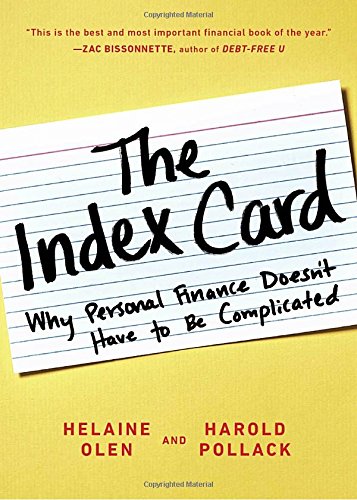
The Index Card: Why Personal Finance Doesn't Have to Be Complicated, by Helaine Olen, Harold Pollack

The Index Card: Why Personal Finance Doesn't Have to Be Complicated, by Helaine Olen, Harold Pollack


The Index Card: Why Personal Finance Doesn't Have to Be Complicated, by Helaine Olen, Harold Pollack

PDF Ebook The Index Card: Why Personal Finance Doesn't Have to Be Complicated, by Helaine Olen, Harold Pollack

Book lovers, when you need a brand-new book to review, find the book The Index Card: Why Personal Finance Doesn't Have To Be Complicated, By Helaine Olen, Harold Pollack right here. Never stress not to discover just what you require. Is the The Index Card: Why Personal Finance Doesn't Have To Be Complicated, By Helaine Olen, Harold Pollack your needed book currently? That's true; you are truly a great visitor. This is an excellent book The Index Card: Why Personal Finance Doesn't Have To Be Complicated, By Helaine Olen, Harold Pollack that originates from fantastic author to show to you. Guide The Index Card: Why Personal Finance Doesn't Have To Be Complicated, By Helaine Olen, Harold Pollack offers the most effective encounter as well as lesson to take, not just take, however also discover.

The advantages to consider checking out guides The Index Card: Why Personal Finance Doesn't Have To Be Complicated, By Helaine Olen, Harold Pollack are concerning boost your life high quality. The life quality will not simply regarding the amount of knowledge you will certainly obtain. Also you read the fun or enjoyable books, it will certainly aid you to have improving life top quality. Feeling enjoyable will certainly lead you to do something perfectly. Additionally, the book The Index Card: Why Personal Finance Doesn't Have To Be Complicated, By Helaine Olen, Harold Pollack will offer you the lesson to take as an excellent factor to do something. You could not be worthless when reviewing this publication The Index Card: Why Personal Finance Doesn't Have To Be Complicated, By Helaine Olen, Harold Pollack

Never ever mind if you don't have sufficient time to visit the publication shop and look for the favourite book to read. Nowadays, the online book The Index Card: Why Personal Finance Doesn't Have To Be Complicated, By Helaine Olen, Harold Pollack is pertaining to give simplicity of reviewing behavior. You could not need to go outdoors to search the e-book The Index Card: Why Personal Finance Doesn't Have To Be Complicated, By Helaine Olen, Harold Pollack Searching as well as downloading and install guide entitle The Index Card: Why Personal Finance Doesn't Have To Be Complicated, By Helaine Olen, Harold Pollack in this short article will offer you far better remedy. Yeah, on-line e-book The Index Card: Why Personal Finance Doesn't Have To Be Complicated, By Helaine Olen, Harold Pollack is a kind of digital publication that you can get in the web link download given.

Why ought to be this online e-book The Index Card: Why Personal Finance Doesn't Have To Be Complicated, By Helaine Olen, Harold Pollack You may not require to go someplace to check out the books. You can read this publication The Index Card: Why Personal Finance Doesn't Have To Be Complicated, By Helaine Olen, Harold Pollack whenever and every where you desire. Also it is in our leisure or sensation bored of the works in the workplace, this is right for you. Obtain this The Index Card: Why Personal Finance Doesn't Have To Be Complicated, By Helaine Olen, Harold Pollack right now and be the quickest individual which completes reading this e-book The Index Card: Why Personal Finance Doesn't Have To Be Complicated, By Helaine Olen, Harold Pollack

The Index Card: Why Personal Finance Doesn't Have to Be Complicated, by Helaine Olen, Harold Pollack

“THE MOST NOTABLE PERSONAL FINANCE WRITING OF 2013 . . . WAS A HANDWRITTEN 4 × 6 INDEX CARD.”  —MINNEAPOLIS STAR TRIBUNE

TV analysts and money managers would have you believe your finances are enormously complicated, and if you don’t follow their guidance, you’ll end up in the poorhouse.
 
They’re wrong.
 
When University of Chicago professor Harold Pollack interviewed Helaine Olen, an award-winning financial journalist and the author of the bestselling Pound Foolish, he made an off­hand suggestion: everything you need to know about managing your money could fit on an index card. To prove his point, he grabbed a 4" x 6" card, scribbled down a list of rules, and posted a picture of the card online. The post went viral.
 
Now, Pollack teams up with Olen to explain why the ten simple rules of the index card outperform more complicated financial strategies. Inside is an easy-to-follow action plan that works in good times and bad, giving you the tools, knowledge, and confidence to seize control of your financial life.

  • Sales Rank: #19769 in Books
  • Brand: PORTFOLIO
  • Published on: 2017-03-07
  • Released on: 2017-03-07
  • Original language: English
  • Dimensions: 7.00" h x .70" w x 5.00" l, .47 pounds
  • Binding: Paperback
  • 256 pages
Features
  • PORTFOLIO

Review
“The most important financial advice is stunningly simple and fits on an index card. The newbie investor will not find a better guide to personal finance.”
—BURTON G. MALKIEL, author of A RANDOM WALK DOWN WALL STREET
 
“Ten simple, amazingly effective rules unencumbered by the agendas of fee-sucking fund managers or reckless business-media pundits. Highly recommended.”
—NOMI PRINS, author of ALL THE PRESIDENTS’ BANKERS
 
“The Index Card offers engaging stories, persuasive explanations, and fascinating data. It’s realistic, honest, wise, and compassionate, as well as socially and politically astute.”
—JOE CONASON, editor in chief at THE NATIONAL MEMO
 
“All parents should buy The Index Card for their children. If they refuse to read it, consider disinheriting them.”
—ROBERT H. FRANK, professor of economics, CORNELL UNIVERSITY
 
“In a world of relentless financial noise, Helaine and Harold are here to help. This is the best and most important financial book of the year.”
—ZAC BISSONNETTE, author of DEBT-FREE U and THE GREAT BEANIE BABY BUBBLE

About the Author

HELAINE OLEN is the acclaimed author of Pound Foolish: Exposing the Dark Side of the Personal Finance Industry, which was featured on The Daily Show with Jon Stewart and PBS’ Frontline. She writes the Spread the Wealth personal finance column for Inc.  Her work has appeared in numerous publications, including The New York Times, Salon, Slate, where she wrote the popular column The Bills, and the Los Angeles Times, where she wrote the popular Money Makeover column. 

 
HAROLD POLLACK is the Helen Ross Professor of Social Service Admin­istration at the Univer­sity of Chicago, where he researches health and urban policy concerns and is a nonresident fellow at the Century Foundation. He writes regu­larly for the Washington Post, Politico, Atlantic Monthly, healthinsurance.org, and other publications.

Excerpt. © Reprinted by permission. All rights reserved.

INTRODUCTION

SAM’S STORY

A few years ago, Sam received an inheritance after his dad died. Grief stricken and overwhelmed by the demands of work, marriage, and raising children, he placed the money in a local bank’s savings account. Every so often, Sam would make an effort to think about the money. He knew he should invest it in . . . well, something. A few times a year a very official-sounding officer from the bank, someone called a wealth officer, would contact him about it, suggesting a complimentary meeting.

So Sam would sit down at the bank, and an advisor would offer him coffee and muffins and talk to him about his children, his job, and where he next planned to go on vacation. Then he would offer a solution, the next-best thing to a guarantee, he said, as he started talking really fast about expected rates of return, risk, and the importance of the stock market.

The wealth officer, or wealth specialist, or whatever the heck he was called, wanted Sam to sign papers right there and then so the money could get to work, as he put it. But Sam held off. He knew there were unscrupulous money people out there, and he wanted to do his due diligence.

So Sam would call friends, and friends of those friends. Sometimes those friends were in finance or married to people in finance, and they would make suggestions based on what they had picked up from their jobs or their husbands or wives over the years. One offered to manage the money for him altogether but didn’t say how he would be compensated for his time and effort. Another said he should call Vanguard and put the money in something called index funds. Bonds, advised another. Others talked about allocating different percentages to different investments. Still another pal suggested a financial advisor named Kelly who had done amazing things for him.

Other people told Sam horror stories. There was the friend who had been persuaded to invest in tech stocks in 1999 and lost “a bundle,” as he put it. A coworker told him about the friend of the family who seemed so kind but put her mom in some sort of investment that didn’t do what it was supposed to and left her in a worse position than when she started out. Several people mentioned Bernie Madoff.

It was overwhelming. It seemed as if everyone contradicted one another. And they were all so sure . . . sure that they had the secret to how to make money grow or that it was all a rip-off. And Sam was scared. He needed that money. He wanted to send his children to college. He couldn’t bring himself to risk losing it.

So Sam ended up doing . . . nothing.

Not only did Sam’s nest egg end up losing a chunk of its value to inflation, but the stock market also did well during this period. Sam didn’t benefit from that run-up. He wasn’t running anywhere. He was stuck doing nothing because the combination of the myriad options and uncertainties of money, the economy, and the financial services industry had all but paralyzed him.

THE POUND FOOLISH STORY

Sam is hardly alone. Statistics and studies show that many of us choose not to deal or take a hands-on approach when it comes to our finances.


   • Almost three out of four of us say our finances cause us stress on at least a monthly basis.
   • One-third of those in relationships say money is a major source of conflict with their significant other.
   • Fifty-five percent of people with investable assets worth between $50,000 and $250,000 say they fear outliving their retirement savings.
   • Sixty-nine percent of us answered “never” when asked how often we balance our checking accounts.

The roller coaster that is our economy only makes us even more hesitant to take control of our financial lives. In her book Pound Foolish: Exposing the Dark Side of the Personal Finance Industry, Helaine told the story of how for all too many of us wages began to stagnate and fall, even as jobs and paychecks became less secure. At the same time, almost all the income and wealth gains since the end of the Great Recession have gone to the wealthiest.

We feel as if we are falling behind because, frankly, we are, often through no fault of our own.

We’re convinced any financial mistake will send us on a downward spiral we won’t be able to recover from. Many of us walk around with a constant and growing sense that financial doom can arrive at any moment.

So like Sam we fret about our finances but remain frozen. Money feels complicated, boring, scary, and overwhelming all at once. Who wants to wade through competing budget apps? We want to be careful financial stewards but instead get caught up playing a losing game of financial Whac-A-Mole.

Desperate, we tell ourselves that someone out there must have the answer. All too many people working in the financial services industry market themselves as our friends who have special insights into the world of finance and future events. Even as we don’t trust many of the financial types we encounter, we are secretly convinced there is one person out there, one honest man or woman, who can identify exactly that magic investment for us, and guarantee that our money will grow, and that nothing will go wrong, not ever.

But as Pound Foolish showed, many of our financial problems were not the result of our financial missteps. They were caused by economic trends and recessions and then compounded by the failure of financial regulators to crack down on bad behavior by those who claimed to be offering us help.

Many of Pound Foolish’s readers contacted Helaine to thank her for not laying all the blame of their financial woes on their shoulders, and just as many had a simple follow-up question: If we all need to be wary of the financial services industry, and yet we also need to be proactive about our finances, what do we do?

For a long time, Helaine had no answer to that question.

Fortunately, Harold did.

HAROLD’S STORY

Like Helaine, Harold does not work in the financial services industry. A professor at the University of Chicago and a contributor to a number of media outlets and blogs, including the Washington Post’s Wonkblog, Harold came up with the concept of the index card not as some academic experiment but as a practical solution to the kinds of urgent financial problems many of us encounter at some point in our lives. As he explains,

For most of my life, I had no real savings to speak of. I didn’t even own a home until I was forty years old. My wife, Veronica, and I were not poor by any means, but we were starting a family. Like many people our age, we never displayed much financial forward thinking or savvy. I was putting money in my retirement account but basically treading water otherwise. We rented (and subsequently missed out on a historic real estate run-up). I invested in dot-com stocks. You can guess how well that ended. We had child-care expenses. We let some costly debts accumulate. We overpaid for a nice new car when a nice used model would have worked fine.

Then, as so often is the case, life happened.

Around the time of my forty-first birthday, Veronica lost her mother quite suddenly. Veronica’s brother Vincent, who lives with an intellectual disability known as fragile X syndrome, was living with Veronica’s mom. The issues were sad and complicated, but the bottom line was simple. After this untimely death, Vincent needed to move in with us and our two young daughters. Vincent moved in with us and our two young daughters.

Immediately, we felt the financial strain. Veronica had to leave the workforce to address Vincent’s needs. Yet even as our income fell, our expenses mounted. And mounted. Vincent had multiple hospitalizations and medical challenges, many related to his morbid obesity. The La-Z-Boy chair we bought to support his 340-pound frame cost nearly $1,000. Not long after, Veronica developed a serious heart infection that landed her in the cardiac ICU. We weren’t in financial free fall, but things were tight, and we were living a fundamentally different kind of life than we had ever expected.

I needed to quickly find some real answers to right our financial life.

I didn’t have much financial knowledge. I did draw upon the tools of my academic trade to help guide me as I tried to distinguish the useful advice from the useless or worse. I consulted financial advisors and read books and academic papers on managing one’s finances.

Through trial and error, conversations with friends and other academics, I slowly pieced together a new financial regimen. Some was common sense. Some involved teaching myself insights that were actually well known to financial economists but underemphasized in the cacophony put out by the financial services industry. The most important advice was embarrassingly simple. It included the following:


   • Save 10 to 20 percent of your money—or as much as you can, if you can’t put that much aside.
   • Pay your credit card balance in full every month.
   • Invest in low-cost index funds.

By following these rules and a handful more, we saw our financial picture begin to brighten. Life didn’t change overnight. But it did change. We had more money in the bank. We could afford to take a vacation without fearing what would become of us the next month if we encountered an unexpected home repair. We could exploit the various tax-advantaged savings offerings we could never use before. And putting money away allowed us to get lucky in the stock market; investment returns from the most recent bull market will help pay the college tuition for our daughters. We could refinance our mortgage on favorable terms. We found ourselves able to help out our relatives who were struggling. We felt financially secure, even though our house is still worth notably less than it was when we bought it in 2003.


THE INDEX CARD STORY

When Pound Foolish was published, Harold contacted Helaine and interviewed her on the Reality-Based Community blog. During their Internet chat, Harold offhandedly noted that the fundamental dilemma facing the financial services industry is that the correct advice for most people fits on a three-by-five-inch index card and is available for free at the library.

A surprising number of people wrote to Harold, asking for the card. Because he was speaking metaphorically, this was a problem. But he had promised. So he pulled one of his daughter’s index cards out of her backpack, picked up a pen, and in maybe three minutes wrote down some of the simple and basic financial rules he and Veronica had been living by for the past decade. He then snapped a crude picture with his smartphone. This is what it looked like:

Harold posted the photograph on his blog, and things quickly went viral. There were hundreds of thousands of hits around the Internet. A life coach copied it word for word and read it aloud in a YouTube video. The card was even translated into Romanian. There were also shout-outs from people who have deep knowledge about personal finance, economics, and investments.

“Pollack’s right. Follow these principles and you’ll be in much, much, much better shape than most Americans—or most anyone,” wrote Ezra Klein over at the Washington Post.

“Your new financial advisor is Harold Pollack’s index card,” declared the website Boing Boing.

Marketplace, Forbes, the Huffington Post, Reddit, and Lifehacker discussed it.

The MacArthur fellow Sendhil Mullainathan tweeted the card out. So did top economists like Justin Wolfers. Vanguard mentioned the index card on its blog and e-mailed a picture of it with accompanying information in a “MoneyWhys” New Year’s investment advice message to its subscribers. Money magazine called it one of the “best new money ideas” of 2013. The Minneapolis Star Tribune wrote, “The most notable personal finance writing of 2013 . . . was a handwritten 4 × 6 index card.”

There were thousands of comments and tweets, Facebook likes, and LinkedIn shares. Among the index card’s many fans? Helaine, who knew she finally had an answer for her readers. Rather than people relying on the so-called expert advice of the financial industry to dig them out of their money troubles and provide them with a magic bullet, she and Harold knew instinctively that the answer was much simpler and that it lay not with the experts but within ourselves.

One quick note: You’ll notice we made a few alterations to the original index card. Most of these changes were either organizational or for wording, but a few are more significant. Most important: Harold originally suggested that people save 20 percent of their pretax income. It’s a terrific goal. It’s also all but impossible for many of us. Aiming for 10 to 20 percent is a more realistic long-term strategy. We also eliminated the recommendation to use target-date funds—read on to find out why. Finally, we felt it was important to include insurance and housing, both of which didn’t make it onto the original card.

KEEP IT SIMPLE—THE ONLY STORY YOU NEED TO KNOW

So a question: If the rules are so simple, why do you need more than an index card—heck, a book—to explain them?

Most of us don’t want to follow rules unless we know why they are rules. This book explains how the rules work and why we chose them. They may be simple, but they aren’t always self-explanatory.

Simplicity—as anyone who has ever tried to perfect a golf swing knows—often takes work and insight to achieve. Just telling you financial rules to follow is not the same thing as showing you how to master them so that you can follow them with confidence. And you will need to because . . .

There is a whole industry of financial services advisors out there who make their living by convincing you that it’s naive to believe that simplicity, common sense, and restraint are potent enough weapons with which to deal with the whirlwind of financial chaos facing any of us on any given day. They make their money by convincing you that investing is so complicated, you need to turn it over to them. Or they convince you that they—as insiders, as “professionals”—have the ability to outsmart everyone else and know exactly what investment scheme will outperform the S&P 500.

The financial world offers an odd juxtaposition. The financial products we use in our day-to-day lives—credit cards, mutual funds, mortgages—are often quite complicated. But that doesn’t mean the way we lead our financial lives needs to be equally complicated.

Between Helaine’s experience covering the pitfalls and traps of the financial services industry and Harold’s proven practical solutions to his own financial problems, we can help you take control of your financial life.

So by following the nine simple rules as outlined on our index card, you will


   • have the confidence to make your own financial decisions;
   • discover basic financial truths such as that low-fee index funds outperform just about any more complicated investment you can buy and that simple fixed-rate mortgages remain the best way to borrow money to buy your house;
   • be armed with a timeless set of guidelines that you can turn to no matter what financial issues you may face or how drastically the winds of financial change shift; and
   • be sure you never make the same mistake Sam made and let your fears about the financial unknown prevent you from doing anything.

Ready to finally take action and begin the next phase of your financial life?

Good. Let’s get started.

LIFE HAPPENS: WHY YOU NEED TO SAVE MONEY

There comes a time when outside circumstances—what most people refer to as life—force us to take control.

For Harold, this moment came with the sudden arrival of his brother-in-law Vincent, which sent the household into fiscal chaos.

For most of us, however, it’s not that sudden. Money comes in, and money goes out. It seems to simply vanish, lost in a windstorm of expected and unexpected expenses. There’s rent or mortgage, car payments, and the grocery bill. And honestly, who can even make sense of the average cell phone bill?

And those are just the monthly bills and regular expenses.

Then there are what might be termed the unexpected expected expenses. Take car repairs. Do you know anyone who ever planned for a broken-down car? On the other hand, do you know anyone who has ever had a car that didn’t break down?

We want to be on top of our money, but instead we find ourselves avoiding thinking about it. It’s natural, in a way. It can be difficult and the opposite of fun. But our avoidance prevents us from doing the most commonsense, basic thing we can do to take control of our financial life: Learn how to save.

WHY IT’S SO HARD TO SAVE—PART 1

Why do so many of us seem to come up short when playing the financial long game?

Well, take a breath. We’re here to tell you that—wait for it . . .

It’s not totally your fault.

If you find yourself working long hours, not spending extravagantly, and still wondering why you’re not saving a dime, you’re not alone. There are lots of things out there that make it hard for all of us to save.

In her book Pound Foolish, Helaine told the story of how many of our financial lives collapsed. The most important takeaway: For all too many of us, wages began to stagnate and fall. Accounting for inflation, the annual median income of American households declined by about $3,000 between 1998 and 2013. At the same time, income inequality has increased. Almost all gains in household income and wealth in the past several years have gone to the top 1 percent of the population, even the top 0.1 percent.

But just because our salaries were all but frozen didn’t mean our cost of living enjoyed a similar break. Not only did the cost of all those things you can’t live without—think health care, housing, and education—go up, but they have generally gone up faster than our salary increases and the costs of less essential items.

And even as we faced all these hurdles, we don’t exactly live in a society that encourages moderation. In America, most of us idealize living large. Luxury is marketed at us incessantly. It’s easy to tell people—not to mention ourselves—to ignore the millions of social cues that encourage us to overspend. It’s certainly good advice but hard for all too many of us to heed.

When Helaine’s older son was born in 1999, you would have been hard-pressed to spend more than $400 for a stroller, and that would have been a bulky, less-than-practical European import. Yet by the time her younger son was born in 2003, the $1,000 Bugaboo was (for a surprising number of us) suddenly a must-have. A $400 stroller seemed like a bargain-basement item. It was a great feat of marketing.

Watch any play-off game. Halftime ads feature a parade of amazing cars. Reprising his look from The Matrix, Laurence Fishburne hawks the new Kia K900 (manufacturer’s suggested retail price $59,500). He intones that viewers should “challenge the luxury you know.” He wants them to think about “the way it makes you feel.”

All this seems counterintuitive given our tough economic times. How could we become more addicted to luxury spending? Yet research says it’s just what we should expect to happen. According to economists Marianne Bertrand and Adair Morse, authors of a paper called “Consumption Contagion,” the more the wealthier people at the top of the income ladder spend on high-status luxury goods, the greater the pressure to keep up across the income spectrum. This “trickle-down consumption,” as they call it, reduces the savings rates for all too many of us.

The result?


   • Our national savings rate has been in the low single digits for twenty-five years.
   • A little more than a quarter (27 percent) of American households have net worths of $5,000 or less.
   • 47 percent of us report that we could not come up with $400 if we needed to without selling something, resorting to increased credit card debt, borrowing from a friend or relative, or taking out a payday loan.

That’s the world we live in. It isn’t easy to step out.

WHY IT’S SO HARD TO SAVE—PART 2

The harder it is to make it through to the next day financially—whatever the reason—the harder you will find it to make careful and disciplined decisions. That’s not because you are a bad person who wastes money and, thus, lands in financial hot water time and time again. It has to do with how we human beings are hardwired, the way we react to scarcity.

Most helpful customer reviews

112 of 114 people found the following review helpful.
You can just read the table of contents, but still a good read (the details matter).
By Jason
Olen and Pollack have written a quick easy to read book on personal finance. (This is ironic given that Olen previously wrote Pound Foolish, which lambast most of popular personal finance books.) In Pound Foolish, Olen criticizes personal finance gurus for overemphasizing financial gimmicks, such "The Latte Factor" or the "Dogs of the Dow." and financial advisors for selling overly-complicated self-serving investment and insurance products. After being so critical of other people's financial advice, one wonders what Olen would recommend people do with their money? Well in The Index Card, Olen joins with Harold Pollack (a social science professor, but not an economist, at the University of Chicago) to answer the question, "What should middle class Americans do with their money?"

As the title indicates, Olen's and Pollack's answer fits on an Index Card. 1-Strive to save 10%-20% of your income. 2-Pay your credit cards off every month (and minimize other debt). 3-Maximize your 401(k) and other tax-advantaged savings accounts. 4-Never buy or sell individual stocks. 5-Buy inexpensive well-diversified indexed mutual funds and exchange-traded funds. 6-Hire a fee-based fiduciary (avoid commission-based financial salespeople). 7-Wait to buy only as much home as you can afford (remember homes are usually highly-leveraged investments with high maintenance costs). 8-Buy term life insurance, auto-insurance (especially liability), home insurance or renter's insurance, and disability insurance. 9-Support the social safety net (government programs, such as Social Security, Medicare, Medicaid, and student loans, because 96% of American depend on such programs for financial assistance, even though 40% deny obtaining help from the government.) 10-Keep doing the first 9.

Much of this advice falls under easier said than done, but these are achievable goals for someone in a stable financial situation. The authors repeatedly tell readers how to take care of their money during good times, so that they will have money during bad times. The first principle, saving ten to twenty percent of your income will be difficult for people who have gotten used to spending what they make, which the authors acknowledge, but one should at least save as much as possible. Likewise with the second principle, payoff your credit cards every month, easier said than done, but the Olen and Pollack suggest that if you can't pay them off, then stop using them altogether. Psychologically cash is harder to spend than credit. Principle 3 harkens back to principle 1, save 10-20% of your income, only try to save as many pre-tax dollars as possible to reduce your taxes and you're less likely to miss what you never got. Principle 4 is simple, playing the stock market is like playing poker, unless you are exceptionally skilled and lucky (and rich) you will lose more often than you win. Instead, principle 5 suggest that you bet with the house and just try to match the market, since most stock-pickers and fund managers do worse than the market over the long run. The last two principles stress protection for disasters that are too big for you to self-insure with your savings. Finally, like staying in physical shape, staying in financial shape requires frequent repetition.

Through trial and error as well as research, I have come to many of the same conclusions. Recently, I have been able to implement all ten principles. They work well for me, but I wish the Olen and Pollack had said more about costs that seem destined to set one back, such paying for college and home renovations. Nonetheless, I would recommend this book to recent high-school or college graduates just beginning their careers.

P.S. I have taught college courses and published papers on the sociology of money. I have also obtained licenses to sell life and health insurance and mutual funds. Thus, I have been on both sides of the table.

27 of 27 people found the following review helpful.
Simple advice is the advice you will actually follow
By Andre Marquis
Simple advice is the advice you're most likely to follow and this book does a great job of laying out exactly that - simple steps you can take to protect your financial future and *why* those are good steps and how to avoid common pitfalls. Great for people who are not following the Index Card steps already and a perfect book to hand out to those younger folks in your life who need a to get started.

5 of 5 people found the following review helpful.
Simple read with straightforward advice
By Cfamily
This is a straightforward book with simple advice to follow. I purchased this book because it was listed as a “beach read” in Money Magazine. Although a lot of the advice is common sense, I still found the book valuable because it confirmed strategies that I was already doing- like pay your credit card balance in full every month and buy inexpensive index mutual funds. I found their advice on mutual funds very beneficial because it led me to re-evaluate the mutual funds that I currently own and I ended up selling off my funds that were both poor performers and had high management fees (as they were actively managed) and purchased better rated mutual funds with low fees. I didn’t agree with all of the financial advice such as never buy or sell individual stocks. Instead, I would suggest to place the bulk of your money in low fee diversified index mutual funds and for any extra money that you are okay with losing, then it’s okay to buy individual stocks. I purchased both Ford and GM stocks and did very well with the former and lost all my investment with the latter. I also disagree with their short argument against making money from income properties as they state “Real estate speculation is best reserved for gamblers and the pros” (page 175). I have 3 investment properties and do very well with them. I have a property manager to handle any daily issues that may come up. They are all paid off so I receive positive cash flow every month. I do not think they did the topic justice and would suggest the “Rich Dad Poor Dad” series for anybody interested in real estate. Overall, I think the book is worth purchasing for those new to finance or anybody wanting financial strategies explained very simply.

See all 101 customer reviews...

The Index Card: Why Personal Finance Doesn't Have to Be Complicated, by Helaine Olen, Harold Pollack PDF
The Index Card: Why Personal Finance Doesn't Have to Be Complicated, by Helaine Olen, Harold Pollack EPub
The Index Card: Why Personal Finance Doesn't Have to Be Complicated, by Helaine Olen, Harold Pollack Doc
The Index Card: Why Personal Finance Doesn't Have to Be Complicated, by Helaine Olen, Harold Pollack iBooks
The Index Card: Why Personal Finance Doesn't Have to Be Complicated, by Helaine Olen, Harold Pollack rtf
The Index Card: Why Personal Finance Doesn't Have to Be Complicated, by Helaine Olen, Harold Pollack Mobipocket
The Index Card: Why Personal Finance Doesn't Have to Be Complicated, by Helaine Olen, Harold Pollack Kindle

The Index Card: Why Personal Finance Doesn't Have to Be Complicated, by Helaine Olen, Harold Pollack PDF

The Index Card: Why Personal Finance Doesn't Have to Be Complicated, by Helaine Olen, Harold Pollack PDF

The Index Card: Why Personal Finance Doesn't Have to Be Complicated, by Helaine Olen, Harold Pollack PDF


Senin, 19 Agustus 2013

[Z309.Ebook] Download Ebook Enterprise Software Architecture and Design: Entities, Services, and Resources, by Dominic Duggan

Download Ebook Enterprise Software Architecture and Design: Entities, Services, and Resources, by Dominic Duggan

Exactly how a concept can be obtained? By looking at the superstars? By seeing the sea and taking a look at the sea interweaves? Or by reading a book Enterprise Software Architecture And Design: Entities, Services, And Resources, By Dominic Duggan Everyone will have specific characteristic to get the motivation. For you that are passing away of publications as well as constantly get the motivations from publications, it is really fantastic to be below. We will certainly reveal you hundreds collections of guide Enterprise Software Architecture And Design: Entities, Services, And Resources, By Dominic Duggan to check out. If you such as this Enterprise Software Architecture And Design: Entities, Services, And Resources, By Dominic Duggan, you can additionally take it as yours.

Enterprise Software Architecture and Design: Entities, Services, and Resources, by Dominic Duggan

Enterprise Software Architecture and Design: Entities, Services, and Resources, by Dominic Duggan


Enterprise Software Architecture and Design: Entities, Services, and Resources, by Dominic Duggan

Download Ebook Enterprise Software Architecture and Design: Entities, Services, and Resources, by Dominic Duggan

Visualize that you get such particular awesome experience and also expertise by simply checking out an e-book Enterprise Software Architecture And Design: Entities, Services, And Resources, By Dominic Duggan. Exactly how can? It appears to be higher when an e-book could be the finest point to find. E-books now will appear in published as well as soft file collection. One of them is this book Enterprise Software Architecture And Design: Entities, Services, And Resources, By Dominic Duggan It is so common with the printed e-books. Nevertheless, many individuals in some cases have no space to bring the publication for them; this is why they can't check out guide anywhere they really want.

If you get the printed book Enterprise Software Architecture And Design: Entities, Services, And Resources, By Dominic Duggan in on-line book shop, you may likewise discover the same problem. So, you should relocate store to store Enterprise Software Architecture And Design: Entities, Services, And Resources, By Dominic Duggan and also search for the readily available there. However, it will not happen here. The book Enterprise Software Architecture And Design: Entities, Services, And Resources, By Dominic Duggan that we will provide here is the soft file principle. This is just what make you can conveniently locate as well as get this Enterprise Software Architecture And Design: Entities, Services, And Resources, By Dominic Duggan by reading this website. We offer you Enterprise Software Architecture And Design: Entities, Services, And Resources, By Dominic Duggan the most effective product, consistently and also constantly.

Never ever question with our deal, due to the fact that we will certainly consistently give what you need. As such as this updated book Enterprise Software Architecture And Design: Entities, Services, And Resources, By Dominic Duggan, you could not discover in the various other area. Yet here, it's quite easy. Simply click and also download, you could have the Enterprise Software Architecture And Design: Entities, Services, And Resources, By Dominic Duggan When convenience will reduce your life, why should take the complex one? You can purchase the soft data of guide Enterprise Software Architecture And Design: Entities, Services, And Resources, By Dominic Duggan here and also be member people. Besides this book Enterprise Software Architecture And Design: Entities, Services, And Resources, By Dominic Duggan, you can also discover hundreds lists of guides from numerous resources, collections, publishers, as well as authors in worldwide.

By clicking the web link that we provide, you can take the book Enterprise Software Architecture And Design: Entities, Services, And Resources, By Dominic Duggan perfectly. Hook up to web, download, and also save to your tool. Exactly what else to ask? Checking out can be so easy when you have the soft documents of this Enterprise Software Architecture And Design: Entities, Services, And Resources, By Dominic Duggan in your gizmo. You can additionally replicate the file Enterprise Software Architecture And Design: Entities, Services, And Resources, By Dominic Duggan to your workplace computer system or at home and even in your laptop. Merely share this excellent news to others. Suggest them to see this resource as well as get their searched for publications Enterprise Software Architecture And Design: Entities, Services, And Resources, By Dominic Duggan.

Enterprise Software Architecture and Design: Entities, Services, and Resources, by Dominic Duggan

This book fills a gap between high-level overview texts that are often too general and low-level detail oriented technical handbooks that lose sight the "big picture".�This book discusses SOA from the low-level perspective of middleware, various XML-based technologies, and basic service design.�It also examines broader implications of SOA, particularly where it intersects with business process management and process modeling.�Concrete overviews will be provided of the methodologies in those fields, so that students will have a hands-on grasp of how they may be used in the context of SOA.

  • Sales Rank: #966313 in Books
  • Published on: 2012-02-28
  • Original language: English
  • Number of items: 1
  • Dimensions: 9.55" h x 1.25" w x 6.40" l, 1.75 pounds
  • Binding: Hardcover
  • 512 pages

From the Back Cover
Provides principles and best practices for the design and development of enterprise software applications

Enterprise software drives much of the world's IT systems in critical domains such as healthcare, finance, e-commerce, and government. Web services and cloud computing are two manifestations of the growing sophistication and interconnectedness of business IT processes. Despite its importance, the agreed best practices for building enterprise software are still very much a "work in progress." This text provides a timely review of the principles and practice of enterprise software architecture, including the perspectives of software-oriented architecture (SOA), domain-driven design, and representational state transfer (REST).

It also features:

  • Both the implementation-oriented perspective of the hands-on developer and the design-oriented perspective of the software architect

  • Discussion of the support for enterprise software development provided by popular frameworks such as Java Enterprise Edition and Windows Communication Foundation, including illustrative examples

  • Discussion of trends in computer science research that promise to have a bearing on the hard problems associated with building reliable enterprise applications

  • Review of basic concepts that any enterprise software developer or architect will need to understand, in programming languages and distributed systems

Intended to bridge the gap between high-level conceptual overviews and in-depth technical tutorials, Enterprise Software Architecture and Design is ideal for students in computer science, information systems, and systems engineering, as well as software development professionals, computer scientists, and software architects.

About the Author
Dominic Duggan, PhD, is a faculty member in the Department of Computer Science at Stevens Institute of Technology. His research interests are in the design and development of secure and reliable software systems. His publications have appeared in leading journals and conferences.

Most helpful customer reviews

1 of 2 people found the following review helpful.
A wonderful overview of middleware and enterprise software architecture.
By mosen Agamawi
The book provides comprehensive discussions about many emerging challenges and principles related to enterprise software systems. There is a strong emphasis on the role of SOA on web services and data modeling.
I am very interested in the discussions related to DDA and REST architecture and comparisons with different middleware technologies such as SOAP and MOM; their limitations and applicability’s in web development applications. Up to this point I did not have chance to explore all the nitty-gritty details of so many topics addressed in the book, but I plan to do so in the near future.
I highly recommend this book for professionals on software design and architecture specifically in object-oriented web development and enterprise software. The book gives comprehensive discussions of so many related software architectures & technologies, it also provide excellent up-to-date list of references.

See all 1 customer reviews...

Enterprise Software Architecture and Design: Entities, Services, and Resources, by Dominic Duggan PDF
Enterprise Software Architecture and Design: Entities, Services, and Resources, by Dominic Duggan EPub
Enterprise Software Architecture and Design: Entities, Services, and Resources, by Dominic Duggan Doc
Enterprise Software Architecture and Design: Entities, Services, and Resources, by Dominic Duggan iBooks
Enterprise Software Architecture and Design: Entities, Services, and Resources, by Dominic Duggan rtf
Enterprise Software Architecture and Design: Entities, Services, and Resources, by Dominic Duggan Mobipocket
Enterprise Software Architecture and Design: Entities, Services, and Resources, by Dominic Duggan Kindle

Enterprise Software Architecture and Design: Entities, Services, and Resources, by Dominic Duggan PDF

Enterprise Software Architecture and Design: Entities, Services, and Resources, by Dominic Duggan PDF

Enterprise Software Architecture and Design: Entities, Services, and Resources, by Dominic Duggan PDF

Senin, 12 Agustus 2013

[P461.Ebook] PDF Ebook Iboga: The Visionary Root of African Shamanism, by Vincent Ravalec, Mallendi, Agnès Paicheler

PDF Ebook Iboga: The Visionary Root of African Shamanism, by Vincent Ravalec, Mallendi, Agnès Paicheler

So, merely be right here, locate the e-book Iboga: The Visionary Root Of African Shamanism, By Vincent Ravalec, Mallendi, Agnès Paicheler now and check out that quickly. Be the first to read this e-book Iboga: The Visionary Root Of African Shamanism, By Vincent Ravalec, Mallendi, Agnès Paicheler by downloading in the web link. We have some various other publications to check out in this internet site. So, you could find them additionally conveniently. Well, now we have done to offer you the ideal publication to check out today, this Iboga: The Visionary Root Of African Shamanism, By Vincent Ravalec, Mallendi, Agnès Paicheler is truly proper for you. Never overlook that you require this book Iboga: The Visionary Root Of African Shamanism, By Vincent Ravalec, Mallendi, Agnès Paicheler to make much better life. On the internet e-book Iboga: The Visionary Root Of African Shamanism, By Vincent Ravalec, Mallendi, Agnès Paicheler will really provide simple of everything to review as well as take the perks.

Iboga: The Visionary Root of African Shamanism, by Vincent Ravalec, Mallendi, Agnès Paicheler

Iboga: The Visionary Root of African Shamanism, by Vincent Ravalec, Mallendi, Agnès Paicheler


Iboga: The Visionary Root of African Shamanism, by Vincent Ravalec, Mallendi, Agnès Paicheler

PDF Ebook Iboga: The Visionary Root of African Shamanism, by Vincent Ravalec, Mallendi, Agnès Paicheler

Reviewing an e-book Iboga: The Visionary Root Of African Shamanism, By Vincent Ravalec, Mallendi, Agnès Paicheler is type of very easy task to do each time you want. Also checking out every time you really want, this activity will certainly not interrupt your various other activities; lots of individuals typically check out guides Iboga: The Visionary Root Of African Shamanism, By Vincent Ravalec, Mallendi, Agnès Paicheler when they are having the downtime. Just what concerning you? Exactly what do you do when having the extra time? Do not you invest for ineffective things? This is why you should get the publication Iboga: The Visionary Root Of African Shamanism, By Vincent Ravalec, Mallendi, Agnès Paicheler as well as try to have reading practice. Reading this publication Iboga: The Visionary Root Of African Shamanism, By Vincent Ravalec, Mallendi, Agnès Paicheler will not make you ineffective. It will offer a lot more benefits.

This Iboga: The Visionary Root Of African Shamanism, By Vincent Ravalec, Mallendi, Agnès Paicheler is quite appropriate for you as newbie reader. The viewers will certainly constantly start their reading routine with the preferred theme. They might rule out the writer and also publisher that develop the book. This is why, this book Iboga: The Visionary Root Of African Shamanism, By Vincent Ravalec, Mallendi, Agnès Paicheler is really best to check out. Nevertheless, the concept that is given in this book Iboga: The Visionary Root Of African Shamanism, By Vincent Ravalec, Mallendi, Agnès Paicheler will reveal you lots of points. You could start to enjoy additionally checking out up until the end of the book Iboga: The Visionary Root Of African Shamanism, By Vincent Ravalec, Mallendi, Agnès Paicheler.

On top of that, we will discuss you guide Iboga: The Visionary Root Of African Shamanism, By Vincent Ravalec, Mallendi, Agnès Paicheler in soft file types. It will certainly not disturb you making heavy of you bag. You need only computer tool or gizmo. The web link that we provide in this website is available to click and then download this Iboga: The Visionary Root Of African Shamanism, By Vincent Ravalec, Mallendi, Agnès Paicheler You recognize, having soft file of a book Iboga: The Visionary Root Of African Shamanism, By Vincent Ravalec, Mallendi, Agnès Paicheler to be in your tool could make reduce the viewers. So in this manner, be a good visitor now!

Simply attach to the net to acquire this book Iboga: The Visionary Root Of African Shamanism, By Vincent Ravalec, Mallendi, Agnès Paicheler This is why we imply you to use and make use of the established innovation. Checking out book doesn't suggest to bring the published Iboga: The Visionary Root Of African Shamanism, By Vincent Ravalec, Mallendi, Agnès Paicheler Developed technology has enabled you to read only the soft documents of guide Iboga: The Visionary Root Of African Shamanism, By Vincent Ravalec, Mallendi, Agnès Paicheler It is very same. You might not have to go as well as obtain traditionally in browsing guide Iboga: The Visionary Root Of African Shamanism, By Vincent Ravalec, Mallendi, Agnès Paicheler You may not have sufficient time to invest, may you? This is why we provide you the most effective means to obtain guide Iboga: The Visionary Root Of African Shamanism, By Vincent Ravalec, Mallendi, Agnès Paicheler now!

Iboga: The Visionary Root of African Shamanism, by Vincent Ravalec, Mallendi, Agnès Paicheler

Shows how African shamans have used ibogaine for hundreds of years to communicate with ancestral spirits

• Includes an interview with shaman Mallendi, initiation-master of the sacred root

• Shows that the iboga plant, and its derivative ibogaine, is an anti-addictive agent, especially for heroin

• Reveals how ibogaine has been suppressed by the DEA, the FDA, and Christian ministries

Iboga, spiritual ally of African shamans since antiquity, yields ibogaine, a powerful psychotropic substance. It is used mainly in Gabon and Cameroon in a secret, initiatory tradition called bwiti-nganza, in which physical and psychological illnesses can be rooted out and cured. Intense psychological conditioning that includes the rites of confession, contacting and honoring one’s ancestors, and construction of an in-depth psychological inventory are all part of the initiate’s encounter with this sacred root.

Like many visionary and initiatory plants, iboga is a key that gives access to other modes of being and consciousness. Despite its suppression by the FDA since the 1960s, and more recently by the DEA, researchers have shown that ibogaine provides a powerful adjunct to psychology due to its miraculous ability to break addictions--most notably to heroin. To the followers of the Bwiti religion, ibogaine is the indispensable means by which humans can truly communicate with the deepest reaches of their soul and with the spirits of their ancestors. This book details the traditions and techniques of iboga’s use by African shamans and the essential role it occupies in that community in order both to preserve this knowledge and to show how ibogaine may have an important role to play in our modern world.

  • Sales Rank: #104129 in Books
  • Brand: Unknown
  • Published on: 2007-10-12
  • Released on: 2007-10-12
  • Original language: English
  • Number of items: 1
  • Dimensions: 9.00" h x .70" w x 6.00" l, .72 pounds
  • Binding: Paperback
  • 240 pages
Features
  • Iboga: The Visionary Root of African Shamanism

Review
“. . . entertaining and wise, and packed with information. For those interested in psychoactive plants and African shamanism, this book is a rare joy and a must-read.” (Jeremy Narby, author of The Cosmic Serpent and Intelligence in Nature)

“Through the multiple lenses of anthropology, psychology, botany, and medical politics, Iboga brings us closer to the mystery and potential benefits of this powerful African plant-hallucinogen. It is a welcome and valuable addition to the world literature on psychoactive plants.” (Rick Strassman, M.D., clinical associate professor of psychiatry, University of New Mexico School of)

“Iboga offers a riveting, multifaceted exploration of one of our planet’s lesser known but most important sacred plant traditions. It combines fascinating historical, cultural, and ethnographic background; powerful firsthand descriptions of an initiate’s psychospiritual experiences; and the best account to date of iboga’s seemingly enormous potential as a tool to address drug addiction--as well as the long battle for its further research despite grievous political impediments.” (J. P. Harpignies, editor of Visionary Plant Consciousness)

"New age collections strong in visionary plants and African shaman rituals will be intrigued by the very specific discussions of Iboga, which has been suppressed by the FDA since the 1960s and which provides the power to break addictions." (The Midwest Book Review, Jan 2008)

"Not only is this book exceptionally interesting and informative, as well as cleverly humorous at times, but it is written by three very different individuals: a screenwriter/producer/film director, a social science researcher, and a traditional African healer. . . . they have done a wonderful job of sharing what it means to genuinely open ourselves and enter a profoundly healing and consciousness-expanding relationship, both with a plant and with ourselves." (Dawn Brunke, Alaska Wellness, Vol. 13, No. 3, May/June 2008)

"Overall this book contains very valuable material and presents it in a way that makes it pleasant to read and entertaining to learn." (D. Tigermoon, The Pagan Review, May 2008)

"Even if you have no interest in shamanism, this book is well worth a read just to get a clearer idea of how the 'War on Drugs' is preventing helpful medicines from being made available to those who need them. You may not become a 'believer', but you will learn a great deal." (New Witch, Issue 17, Summer 2008)

"[Africans] use it to reach into their psyche and to connect with deceased ancestors. A mix of anthropology, botany, psychology, with a dash of medical politics, the entertaining facts combine history and science." (American Herb Association, 24:1, March 2009)

“Iboga: The Visionary Root of African Shamanism is recommended for those interested in psychoactive plants and the ethnobotanical uses of African Plants, but also for those interested in African religions and traditional medicine.” (H. Rodolfo Juliani, Ph.D., American Botanical Council)

From the Back Cover
VISIONARY PLANTS / ENTHEOGENS

“. . . entertaining and wise, and packed with information. For those interested in psychoactive plants and African shamanism, this book is a rare joy and a must-read.”
--Jeremy Narby, author of The Cosmic Serpent and Intelligence in Nature

Iboga, spiritual ally of African shamans since antiquity, yields ibogaine, a powerful psychotropic substance. It is used mainly in Gabon and Cameroon in a secret, initiatory tradition called bwiti-ngenza, in which physical and psychological illnesses can be rooted out and cured. Intense psychological conditioning that includes the rites of confession, contacting and honoring one’s ancestors, and construction of an in-depth psychological inventory are all part of the initiate’s encounter with this sacred root.

Like many visionary and initiatory plants, iboga is a key that gives access to other modes of being and consciousness. Despite its suppression by the FDA since the 1960s, and more recently by the DEA, researchers have shown that ibogaine provides a powerful adjunct to psychology due to its miraculous ability to break addictions--most notably to heroin. To the followers of the Bwiti religion, ibogaine is the indispensable means by which humans can truly communicate with the deepest reaches of their soul and with the spirits of their ancestors. This book details the traditions and techniques of iboga’s use by African shamans and the essential role it occupies in that community in order to preserve this knowledge and show how ibogaine may have an important role to play in our modern world.

VINCENT RAVALEC is the screenwriter, producer, and director of numerous films as well as the author of many books in French. MALLENDI is a bwiti-ngenza initiator and traditional healer in Gabon. AGN�S PAICHELER is a researcher in the social sciences who lives and works in France.

About the Author
Vincent Ravalec is the screenwriter, producer, and director of numerous films as well as the author of many books in French. Mallendi is a bwiti-nganza initiator and traditional healer in Gabon. Agn�s Paicheler is a social scientist researcher who lives and works in France.

Most helpful customer reviews

2 of 2 people found the following review helpful.
A must read for anyone interested in learning about the best medicine on the planet
By lalababa
An amazing book about an amazing plant. I wish everyone knew about Iboga. It could save the world but first we must save the plant from extinction. As soon as westerners realized what this medicine can do, we of course consume way too much of it. It isn't something that you abuse but even if a lot of westerners use it once, or twice we are contributing to its extinction. The Bwiti in Gabon do not have enough for themselves now. It is a shame. I also wish the Bwiti cold harvest it sustainably and plant their own farms but since it takes so long for the alkaloids to become active 4-7 years, they need to learn patience. Iboga is the most pure, amazing medicine on the planet for sure.

12 of 12 people found the following review helpful.
Good book, though missing an important point
By Joel Rosenblum
I just wish this book would have given some info on microdosing iboga. I and many others have found that one can use very small quantities (20-50mg on your tongue each morning) to overcome depression, anxiety, and other problems. It isn't JUST a visionary tool. In fact, for most people it is far more useful/practical at a lower dose. We need to get this legalized in the US.

4 of 4 people found the following review helpful.
Great book. Gives great insight into the traditional use of iboga
By Martin Polanco MD
This is the most informative book I've read on iboga. I especially enjoyed reading Part Two -A conversation with Mallendi, Initiation Master and Traditional Healer-. The book also explores the experience of iboga as well as the science and politics of its use in the West. I have given copies to staff members at Crossroads Treatment Center where we use ibogaine to treat addiction so that they gain greater understanding of its traditional and ceremonial use.

Highly recommended reading.

See all 12 customer reviews...

Iboga: The Visionary Root of African Shamanism, by Vincent Ravalec, Mallendi, Agnès Paicheler PDF
Iboga: The Visionary Root of African Shamanism, by Vincent Ravalec, Mallendi, Agnès Paicheler EPub
Iboga: The Visionary Root of African Shamanism, by Vincent Ravalec, Mallendi, Agnès Paicheler Doc
Iboga: The Visionary Root of African Shamanism, by Vincent Ravalec, Mallendi, Agnès Paicheler iBooks
Iboga: The Visionary Root of African Shamanism, by Vincent Ravalec, Mallendi, Agnès Paicheler rtf
Iboga: The Visionary Root of African Shamanism, by Vincent Ravalec, Mallendi, Agnès Paicheler Mobipocket
Iboga: The Visionary Root of African Shamanism, by Vincent Ravalec, Mallendi, Agnès Paicheler Kindle

Iboga: The Visionary Root of African Shamanism, by Vincent Ravalec, Mallendi, Agnès Paicheler PDF

Iboga: The Visionary Root of African Shamanism, by Vincent Ravalec, Mallendi, Agnès Paicheler PDF

Iboga: The Visionary Root of African Shamanism, by Vincent Ravalec, Mallendi, Agnès Paicheler PDF