Get Free Ebook If Mayors Ruled the World: Dysfunctional Nations, Rising Cities, by Benjamin R. Barber
Based on the If Mayors Ruled The World: Dysfunctional Nations, Rising Cities, By Benjamin R. Barber information that we offer, you might not be so baffled to be here and also to be participant. Obtain now the soft data of this book If Mayors Ruled The World: Dysfunctional Nations, Rising Cities, By Benjamin R. Barber and wait to be yours. You saving can lead you to stimulate the convenience of you in reading this book If Mayors Ruled The World: Dysfunctional Nations, Rising Cities, By Benjamin R. Barber Even this is forms of soft documents. You could actually make better opportunity to get this If Mayors Ruled The World: Dysfunctional Nations, Rising Cities, By Benjamin R. Barber as the suggested book to check out.
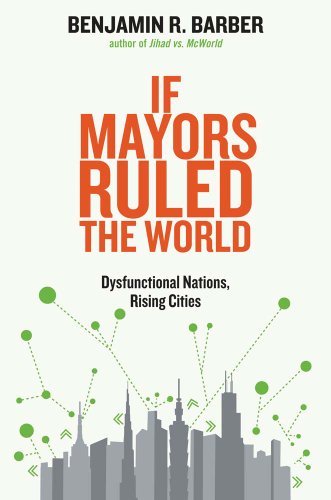
If Mayors Ruled the World: Dysfunctional Nations, Rising Cities, by Benjamin R. Barber

Get Free Ebook If Mayors Ruled the World: Dysfunctional Nations, Rising Cities, by Benjamin R. Barber
When you are rushed of work deadline as well as have no concept to obtain inspiration, If Mayors Ruled The World: Dysfunctional Nations, Rising Cities, By Benjamin R. Barber book is among your remedies to take. Schedule If Mayors Ruled The World: Dysfunctional Nations, Rising Cities, By Benjamin R. Barber will offer you the appropriate resource and also thing to obtain motivations. It is not only about the jobs for politic company, administration, economics, and also other. Some bought jobs making some fiction your jobs likewise need motivations to get over the task. As exactly what you need, this If Mayors Ruled The World: Dysfunctional Nations, Rising Cities, By Benjamin R. Barber will possibly be your selection.
Definitely, to enhance your life top quality, every book If Mayors Ruled The World: Dysfunctional Nations, Rising Cities, By Benjamin R. Barber will certainly have their specific driving lesson. However, having specific recognition will certainly make you feel a lot more positive. When you really feel something occur to your life, sometimes, checking out e-book If Mayors Ruled The World: Dysfunctional Nations, Rising Cities, By Benjamin R. Barber could assist you to make calm. Is that your real hobby? In some cases of course, but sometimes will certainly be uncertain. Your choice to check out If Mayors Ruled The World: Dysfunctional Nations, Rising Cities, By Benjamin R. Barber as one of your reading e-books, could be your appropriate book to read now.
This is not around exactly how much this e-book If Mayors Ruled The World: Dysfunctional Nations, Rising Cities, By Benjamin R. Barber prices; it is not additionally for what type of e-book you really love to read. It is about what you can take as well as obtain from reviewing this If Mayors Ruled The World: Dysfunctional Nations, Rising Cities, By Benjamin R. Barber You can like to select various other e-book; but, it matters not if you try to make this book If Mayors Ruled The World: Dysfunctional Nations, Rising Cities, By Benjamin R. Barber as your reading choice. You will certainly not regret it. This soft file e-book If Mayors Ruled The World: Dysfunctional Nations, Rising Cities, By Benjamin R. Barber can be your buddy in any sort of case.
By downloading this soft data e-book If Mayors Ruled The World: Dysfunctional Nations, Rising Cities, By Benjamin R. Barber in the online link download, you are in the initial step right to do. This site truly supplies you ease of how you can obtain the finest publication, from finest vendor to the brand-new released publication. You could locate much more publications in this site by going to every link that we provide. One of the collections, If Mayors Ruled The World: Dysfunctional Nations, Rising Cities, By Benjamin R. Barber is among the most effective collections to market. So, the initial you get it, the very first you will get all favorable regarding this book If Mayors Ruled The World: Dysfunctional Nations, Rising Cities, By Benjamin R. Barber
Can cities solve the biggest problems of the twenty-first century better than nations? Is the city democracy’s best hope?
In the face of the most perilous challenges of our time—climate change, terrorism, poverty, and trafficking of drugs, guns, and people—the nations of the world seem paralyzed. The problems are too big, too interdependent, too divisive for the nation-state. Is the nation-state, once democracy's best hope, today democratically dysfunctional? Obsolete? The answer, says Benjamin Barber in this highly provocative and original book, is yes. Cities and the mayors who run them can do and are doing a better job. Barber cites the unique qualities cities worldwide share: pragmatism, civic trust, participation, indifference to borders and sovereignty, and a democratic penchant for networking, creativity, innovation, and cooperation. He demonstrates how city mayors, singly and jointly, are responding to transnational problems more effectively than nation-states mired in ideological infighting and sovereign rivalries. Featuring profiles of a dozen mayors around the world—courageous, eccentric, or both at once—If Mayors Ruled the World presents a compelling new vision of governance for the coming century. Barber makes a persuasive case that the city is democracy’s best hope in a globalizing world, and great mayors are already proving that this is so.
- Sales Rank: #154549 in Books
- Brand: imusti
- Published on: 2014-09-30
- Original language: English
- Number of items: 1
- Dimensions: 9.30" h x 1.25" w x 6.11" l, 1.33 pounds
- Binding: Paperback
- 472 pages
- Yale University Press
Review
"A provocative look at how cities can and do lead from the front in addressing the most pressing issues of our time."―Michael R. Bloomberg, 108th Mayor of New York City and founder of Bloomberg LP (Michael R. Bloomberg)
“Audacious. . . ambitious . . . Barber’s book should be required reading for New York’s new mayor, Bill de Blasio.”—Sam Roberts, The New York Times Book Review (Sam Roberts The New York Times Book Review)
“If you like cities you will love this wide-ranging book that captures the energy, excitement and importance of what is going on in the world's great urban centers.”—Fareed Zakaria, CNN (Fareed Zakaria CNN)
“In an impassioned love letter to cities and their political leaders, Barber (Jihad vs. McWorld) celebrates the diversity and ferment that embody urban life.”―Publishers Weekly (Publishers Weekly)
“A provocative, informative account of a different kind of globalization. Highly recommended reading for policymakers and other readers intrigued by forward-thinking forms of governance.”―Kirkus Reviews, Starred review (Kirkus Reviews)
". . . .Makes the intriguing, provocative, and counter-intuitive argument the. . . cities and the mayors who run them are the last best hope for a safer, more prosperous, and more just future. If Mayors Ruled The World is informative and imaginative.”—Glenn C. Altschuler, The Huffington Post (Glenn C. Altschuler The Huffington Post)
About the Author
Benjamin R. Barber is senior research scholar at the Center on Philanthropy and Civil Society, the Graduate Center, the City University of New York. He is also president and founder of the Interdependence Movement and the author of seventeen books, including Jihad vs. McWorld and Strong Democracy. Barber’s project for a Global Parliament of Mayors has attracted scores of urban leaders and intercity networks and is on course for a pilot convening in 2016. He lives in New York City.
Most helpful customer reviews
2 of 2 people found the following review helpful.
Good Ideas Poorly Presented
By Glenn S Silloway
Mr. Barber is erudite to a fault. While the book contains analysis and insight that rings true, and in some cases is demonstrably true, it forces the reader to plod through long repetitive sentences to find the core meaning. There seems to be nothing that Barber hasn't read and he wants you to know it. It's too bad the book is so poorly written because the topic is timely and important. Barber, writing well before Trump, clearly sees the fault lines of the populist surge the Western world is confronting, in the context of city vs. rural: secular vs. religious, cosmopolitan vs local, progressive vs traditional, dynamic vs static economically. He is overly sanguine about the ability of cities to operate an independent policy network despite his qualification that the nation state cannot be ignored or eliminated. But it is still fact that cities are the dynamic engines of the economy, and that their mayors work in the trenches to solve actual (non ideological) problems. They are a bit of light in these dark times.
3 of 3 people found the following review helpful.
The future is already here and Barber is helping us figure out how to inhabit it together.
By Griot Lover
You cannot act an idea...but an idea can motivate a great deal of action. Dr. Barber has shed light on a Big Idea - Interdependence - which he titled a yearly event founded by himself and others in the wake of 9/11: Interdependence Day.
[...]
Now he takes another step in asking an essential question in his new work, If Mayors Ruled The World: Dysfunctional Nations, Rising Cities, and that question is whether or not the nation/state is obsolete and therefore requiring our global society to pay attention to a new way of thinking, speaking and doing when it comes to global governance.
Barber argues that the nation/state paradigm IS obsolete. Not only are new ways of addressing its demise emerging in accordance within the "productive struggle" of democracy throughout the world but also as a result of city-based, "glocal", collaboration among mega cities.
Cities that, no matter your allegiance, bias or loyalties (all with distinct borders of one kind or another) have no time to be confused about the "rules" of nation/states because in cities sewers need to run, fires need to be put out, traffic jams need to be unclogged and people need to feel safe in an increasingly complex and insecure world and any number of problems need to be solved "on-the-spot" as they do present themselves in myriad ways that demand immediate resolution.
Nation/states can hem and haw; posture and pose, emit a lot of sound and fury signifying either nothing or a great deal of confusion...or most deadly...nurture a culture of fear, threat and attack throughout the land.
Cities have to DEAL with life on life's terms and their mayors do too. As a New Yorker I must admit that I cringed a bit when I read the book and saw Bloomberg's name and governing style being provided as an exemplar.
However, Barber points to Bloomberg as one of many examples - he's not really for or against Bloomberg...mayors are human beings, not figureheads, we see them up close in all their sizes, shapes, neurotic tendencies.
Barber points to Bloomberg to illustrate a dynamic that "King Mike" put into play as a mayor around reaching out to various cities, international agencies, etc. to take care of his city (arguably, among other things that he also wanted to take care of).
The jaded New Yorker is compelled to consider the ways in which Bloomberg (Barber has made it clear that Bloomberg's problem was not necessarily always what he wanted to do but HOW he wanted to do it) worked with mayors of other cities in numerous ways to address major issues that all cities face...domestic (gun control) and international terrorist attacks (overall security and safety) among them.
There are at least 11 other mayors that Barber focuses on in as much depth (if not more) as Bloomberg. These mayors are different, similar and ultimately inseparable insofar as they - and their cities - are living artifacts that provide concrete, low-inference data in support of Barber's argument.
Barber's argument is not about how much money a mayor needs to have, which party he needs to belong to...it is about how a mayor - especially a mayor of a cosmopolis - is going to find himself riding in a car down a city street and getting instant feedback whether he asks for it or not.
Bloomberg, once riding in a car asked his fellow rider, NYPD police commissioner Ray Kelly, (as noted in a recent Rolling Stone interview of Kelly) if he saw all the different people flipping him off once the citizens saw it was their mayor going by, to which Ray Kelly responded, "They're not giving you the finger, Mr. President. They're telling you that you're number one." (I paraphrase but you get the gist of it).
Barber makes it clear that mayors, unlike presidents/governors who can be somewhat aloof, monarchical and disconnected from their constituency, can't go down a street and not get a visceral sense of how their city feels about their performance. They can invite that kind of feedback (Koch: "How am I doing?") or they can be a magnet for it.
A mayor can't BE in the city he has been elected to lead, move on its streets and simply drive by a burning fire (Booker) and not feel compelled and connected enough to what's happening to not get out and pull a fellow citizen out of a burning building.
Some mayors roll down a street like Bloomberg rolls down a street and some roll down a street like Booker rolls down a street. Either way, there's no escaping the relationship they have to their city: good, bad, happy or sad...it's in their face 24/7.
Mayors are more connected to their cities than presidents are to their nations, governors are to their states when it comes to "the people".
Barber illustrates how mayors often find themselves reaching out to other mayors all over the world to solve common problems...often bypassing the state and federal resources that are too befuddled to be of service.
Reader beware - I'm a big Barber fan. I've read a lot of his books. You don't just read a Barber book to feel like you are informed.
You read a Barber book to have your "comfort zone" challenged and to actually be compelled to do some critical thinking. You read a Barber book to get some history, to actually get a sense of how "God is in the details" but he is most definitely in the Big Picture too. From Gihad vs. McWorld to Consumed to Strong Democracy to Fear's Empire and Truth to Power...and all the other books not mentioned...Barber lays out arguments that require one to reflect and that, in my own case, inspire one to take action. And Barber is in the streets too - he's in it - as his numerous activities imply. Not helter-skelter activities - all connected by a thread of continuity that radiates the enduring concept NOT of independence...but of interdependence.
How does he do this? Using If Mayors Rules the World as an example I would say his gift is rooted in his own long career as an educator, artist and citizen. He practices what he preaches in founding an Interdependence Movement, narrating a documentary film about the Berkshires' Music Inn, (founded by his father and step-mother) and it's "ahead of its times" impact on the worlds of musicology, jazz, blues, the arts and basic racial, cultural ignorance in America; in remaining in constant contact not only with the other leading theorists and power holders (either directly via working relationships as in his time with Bill Clinton, or indirectly, as in the impact his works have had on the young people in our world, some who wake up to discover that their own parents are quite misguided and find the only way to help an honored, loved one understand where their child is coming from is to introduce them to Barber's works) but also with young people from all walks of life through work to develop a curriculum on civic engagement for public schools and reaching out to engage younger people in the yearly Interdependence Day event.
Barber is a teacher. He's also an energizer. You can google him or youtube him and you will see that there is a thread of continuity in his presentations - from a Ted Talk to an interview with Charlie Rose to a civil discourse and debate on his book with Frances Fox Piven when he took up his current position at the Graduate Center of the City University of New York as a senior research scholar at the Center on Philanthropy and Civil Society. He understands the power of ideas to bring one to life and you sense the power of his own convictions, passion and curiosity that carries over from his presentation of self in every day life to the words on the page. He's not "in his head" about this stuff...he's in his life and in the world.
To the specialist who is very focused in one specific area of political science this may very well seem like a melodramatic and generalized work. Times are such that anybody who is not wholly defeated and disillusioned with talk of "governance" and "politics" and "politicians" can seem overly optimistic or way too general. Folks said that about Carl Sagan too.
I'm not a specialist, I'm an interdependent and I'm looking for voices like Edgar Morin and Benjamin Barber and Ethan Nichtern and Alfonso Montuori to make connections for me and to break down the walls of "specialists" who declare that a book has not been rooted in the same kind of "rigor"mortis as their ideas are locked up in.
Specialists in political science, who are "too deep into it" may not be able to raise their heads above the water line. Barber has written a book that is accessible and that is a starting point, a brilliant starting point, with some enthusiasm in it, that might seem affected to the cynically jaded but to the hungry and willing radiates a general sense of vibrant engagement.
Also, because he understands interdependence in the way that he does, because he knows that interdependence means one thing to Buddhists, one thing to the French polyglot/polymath intellectuals like Edgar Morin and another to the quantum physicists (all whom, by the way, are inter-connected in their own right) he exudes a very democratic sense about the very ideas that he presents.
There is sense that Barber is urging the reader not to "take my word for it" but to look at what he is pointing at. Via his life-long argument for citizenship and a more engaged citizenry in democratic discourse, discussion and debate, it's clear that he does not believe that his own entry point into the idea of a Parliament of Mayors - which is what he ultimately argues for in this work - or the idea of Interdependence is the ONLY entry point. One gets the sense that Barber is now in a place - or has been there for some time - where he himself realizes that wherever you are in your life or in the world or in your own desire to engage and participate...IS the place where you need to start seeing if what he's talking about makes any sense to you or not.
Also, and this may not matter to most, he has GREAT quotes at the beginning of his chapters in that "here's the landscape we are going to explore now" kind of way. Here's one from Chapter 7. "Planet of Slums" The Challenge of Urban Inequality (you listening Mr. de Blasio? Cuz this one connects directly to what's going to be on your plate when you assume office):
"Class remains a key feature of American life, sharing everything from our politics to our health and happiness. Overcoming these divides requires requires nothing less than a new set of institutions and a wholly new social compact."
That quote is from Richard Florida whose own work, The Rise of the Creative Class Revisited, is kin to Barber's work.
What can I say? This is another great contribution from a unique American person. Don't even get me started on how this book has many (if not all) stand alone chapters that would give some juice to a potentially Common Core Learning Standard dehumanized "non-fiction text ONLY please" high school or college class...that's because in the hands of a good teacher students would be exposed to the ways in which creative thinking can be applied in provocative and enlightening ways that root you more deeply in the relevant, the 21st Century and your own personal yearning for a democratic society...in ways that compel you to reach out to and connect with others...via the kinds of forums like the Interdependence Day event that is mentioned above.
Finally, the book delivers a structured argument around a Big Idea that will most certainly be a catalyst for more ideas. Energized, creative and engaged thinkers will find confirmation and affirmation in the very act of creative thinking about real problems in this work. It's not only the conservative-minded who might throw the book away...it's also those locked up in the womb-tomb-rooms of their isolated professions that no longer have the capacity to engage in a dialogic with other professions who will also throw it away. Which is fine - at this point - the disillusioned student in America may pick it up in an urban slum and begin to change the way he thinks when he - or she - thinks about her situation in the world.
Bravo Dr. Barber. Keep on keepin' on!!!
0 of 0 people found the following review helpful.
Good Read but ...
By Sam
Enjoyed the book,math the exception of the "Global Parliament of Mayors" in the final chapter(s). Not sure how practical it is, but sounds great in theory. Not all mayors are as good as the mayors described in this book, and in fact most aren't nearly as accomplished, capable, or competent enough to make a parliament effective. We do need to however empower regional authorities with many of the responsibilities that the States currently have. If you enjoy public administration and case studies you'll enjoy this read.
If Mayors Ruled the World: Dysfunctional Nations, Rising Cities, by Benjamin R. Barber PDF
If Mayors Ruled the World: Dysfunctional Nations, Rising Cities, by Benjamin R. Barber EPub
If Mayors Ruled the World: Dysfunctional Nations, Rising Cities, by Benjamin R. Barber Doc
If Mayors Ruled the World: Dysfunctional Nations, Rising Cities, by Benjamin R. Barber iBooks
If Mayors Ruled the World: Dysfunctional Nations, Rising Cities, by Benjamin R. Barber rtf
If Mayors Ruled the World: Dysfunctional Nations, Rising Cities, by Benjamin R. Barber Mobipocket
If Mayors Ruled the World: Dysfunctional Nations, Rising Cities, by Benjamin R. Barber Kindle

Tidak ada komentar:
Posting Komentar